Minggu, 25 Maret 2012

Architecture 101

Image result for Architecture 101

A touching story about what happens when your first love does not work out, and you’re suddenly reunited with that person. It’s a bit slow in pace, but it allows you to feel the nostalgia of your first love fully while giving us plenty of comedic moments through the lovable Jo Jung Suk.

“Architecture 101” follows Lee Seung Min (Uhm Tae Woong) who ends up on a project where he must rebuild a house for his first love in college, Yang Seo Yeon (Han Ga In). She specifically looks him up to be her architect, while he seems to have forgotten her. However as they work together, memories of their first year together in Architecture 101 are dredged up and the two learn more about each other in their lives since “that incident.” There’s hope that perhaps Seo Yeon and Seung Min can rekindle their love, but he’s now engaged to his colleague (a winning Go Joon Hee) and about to move to the States permanently. Would he give up his life now for the chance to start over with Seo Yeon?

That’s the question that pretty much encompasses the latter half of the film, especially once we get to know the younger counterparts a lot better. Lee Je Hoon is amazing as the younger Seung Min. He portrays the character with a shy geekiness that makes you root for him to get the girl, even though he’s going up against his better looking and richer senior, Jae Wook (Yoo Yeon Seok). Suzy is wonderful as Seo Yeon in a very understated way, being very calm and sweet while Han Ga In plays her with a bit more spunk. I guess it comes with getting older – you’re more confident with getting what you want. I daresay that the younger counterparts are better than the older ones because they are the ones establishing that feeling of a first love. If they don’t have the chemistry and don’t establish that nostalgic feeling for the audience, then we won’t be as invested in what happens to them when they’re older. The older actors do a great job in continuing the feelings where the younger ones left off, although I am going to admit that I think Lee Je Hoon and Suzy’s performances were more memorable.

The flashback scenes in the 90s have the added advantage of featuring Jo Jung Suk, who’s the adorably cute, high-school-repeating, best friend of Seung Min, Nab Ddeuk. I wish we saw him in the present timeline, although as to be expected when one gets older, old friends sometimes remain in the past after we’ve changed so much. He was that best friend who taught you how to woo a girl (or guy) and how to kiss. He was that best friend who had your back no matter what and would find a way to cheer you up. I loved the scene where Seung Min holds on to Nab Ddeuk for support and cries in his arms, and Nab Ddeuk just holds on to him even though he always acts like he’s too cool for emotions.

I must admit that I went into the movie hoping it’ll be a romance like “The Notebook” almost, with a happy ending. And yet, we must all admit that first loves don’t always work out. (Imagine this happening in a K-drama. Would you feel satisfied or not?) And the fact that Seung Min and Seo Yeon have changed so much over the years it makes it almost impossible for them to have that conventional happy ending. Both have made decisions that they need to stick to. And what’s sad is that they were torn apart because of a misunderstanding, something where if you look back on now seems utterly trivial. But things are a bigger deal when younger, so it’s understandable – though silly – that that’s what pulls them apart.

I think that Seung Min and Seo Yeon do achieve a certain happiness at the end though, and I still do envision a different kind of future past the movie. It’s one of those movies where I don’t feel tied to the ending because it’s left open enough for me. Even though it’s pretty clear cut, I personally felt like more could happen. I think that could be attributed to the tone and the pace of the movie. It never felt rushed, and it felt as soothing as an ocean wave. What seemed to be lost feelings came back after a while, so if everyone were patient and went with the flow of their lives, a reunion could always be possible.

Selasa, 25 Oktober 2011

Always

Image result for always korea


Korea has produced many romance films over the years and if you’ve seen even a few of them you may have noticed that things don’t always end well for the lovers.  Be it a spacio-temporal gap, a terminal disease or a handicap, there almost always seems to be something that separates them.  By force of seeing so many of these films I began to wonder if there might have been something behind this.  The most convincing reason I could come up with was that these separations may have been an allegory for a larger theme of separation that looms over Korea, namely the division of the peninsula.

While by no means a catchall theory, it think it stands up pretty well if you examine a number of the genre’s most famous offerings such as Lee Hyeon-seung's Il Mare (2000) and John H. Lee’s A Moment to Remember (2004).  However as the years wore on and my knowledge of Korean cinema increased, this has become a less satisfactory explanation.  It is quite simplistic and vague and though it can easily be applied to a film it can just as quickly be discredited.  I still think there’s something to it but now I can see that it is just one facet of a broader set of priorities for Korean filmmakers.


Song Il-gon, though not as well known as filmmakers like Park Chan-wook, Kim Ki-duk or Lee Myung-se overseas, is nevertheless one of Korea’s most impressive cineastes.  In a very short time he made Spider Forest (2004), Feather in the Wind (2004) and Magicians (2005), all critically-acclaimed films.  Spider Forestin particular was I film I was very impressed with which straddled a fine line between commerce and art and in the briefest possible terms I would describe it as what a Korean David Lynch film might look like.

Given his prior output, his latest seems like a bit of a departure.  A romance film with a big hallyu star, Always was the opening film of last year’s Busan International Film Festival.  If you didn’t know who was behind it, the film seemed just like any other Korean romance film and sure enough this is the kind of reception it received after it premiered.  Because of its mediocre reviews and its disappointing box office returns I was ready to write the film off but out of respect for Song I decided I’d give it a chance.  I must say I’m very glad that I did, while it did not scale the heights of some of his previous films, it turned out to be a rewarding experience that had more to offer than its generic trappings might imply.


Cheol-min (So Ji-sun) is a former boxer which a shady past who now solemnly works odd jobs to make a living.  Jeong-hwa (Han Jye-hyo) is a telemarketer who lost her sight in a accident and mistakes Cheol-min for someone one day while he’s manning the booth at a parking complex.  Sensing something sweet and sincere in him she frequently visits him, sharing his booth as they watch K-dramas.  Both have suffered trauma and this is alluded to early on.  Their pain and consequent vulnerability makes them sensitive and very well suited to one another.  There is something dark lurking within in Cheol-min which he hasn’t fully been able to hide away while Jeong-hwa has her own complex (typical of handicapped characters in cinema) whereby she is unable to accept help from others.

So far so plain, nothing here really hints at anything more than typical romantic fare.  So the question is:  Is Always Song Il-gon’s attempt to make a commercially viable film?  Given the demographic friendly plot, the presence of major Korean heartthrob So Ji-sub and the film’s big marketing push, the answer would appear to be yes.  But this doesn’t mean the film is devoid of substance.  First of all, the film looks great.  The luminous cinematography is hazy and frequently sun-drenched, which gives off a potent air of nostalgia not to mention romance.  Generally speaking the film is well-made, it is evident that the film is a result of a strong directorial hand.

As far as the leads go I would say that the casting of So Ji-sub works in its favor.  Primarily a K-drama actor, So has also impressed in a few feature roles, namely as the stoic gangster in Jang Hoon-s exceptional Rough Cut (2008).  The strong silent type, a staple character of the romance genre, suits him very well.  He succeeds in bringing both the physicality and vulnerability out of his character.  Han Jye-hyo on the other hand is less impressive.  Early on she is very endearing and gels quite well with So but soon she falls prey to excess as she shrieks her way through the film’s more dramatic moments.


At one point in the film, Cheol-min is engaged in a vicious cage fight.  He is presented as the opponent who faces a superior and notoriously dirty fighter.  What struck me about this scene was its ambivalence:  while outmatched, his opponent doesn’t resort to dirty tricks while he does, and this wins him the fight.  The film cleverly brings the concept of audience alignment into question.  We root for him because he is the protagonist and also because the film shows us, through codes and pieces of information, that he is the good guy while the other fighter is the villain, though we have never seen him before this point.  We take these clues at face value but as Cheol-min begins to brutalize his opponent it becomes clear that our moral compass can be easily duped by emotional manipulation.

The film is not without its faults, which include a very poorly defined antagonist and some clunky Deus Ex Machinas but by and large this is a successful outing for Song who has once again stretched out into new territory.  Always proves to be a fresh bent on an old theme and will likely reward discerning viewers who give the film a chance.  I hope a few more people see it as it would be a shame for it drift away into anonymity.

Rabu, 18 Maret 2009

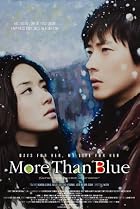
More Than Blue


Image of More Than Blue


This is in the same league as "A Moment to Remember" ... if you like this kind of stuff. It uses the standard 'terminal disease of the week' Korean melodrama template: the first half is fun and lighthearted (to set context and set up the sadness); in the first two-thirds of the second half, we watch the knife go in; and in the final third of the second half, the knife is unmercifully twisted.

Honestly, the first act of the film isn't very good. Instead of focusing on the couple that are going to face the agony, the director let's other characters tell their story. Problem is, these other characters aren't that good while the two leads in this film are likable beyond belief and should have been all over the place in our face. Instead there's the wacky guy with a wacky girl, music industry politics, and a sad, second tier guy who knows, and tells, the story of K who has terminal cancer and is in love with his best friend Cream but since he's dying he doesn't tell her. The Korean Times observed, correctly, I think, that while the theme is familiar it "feels more classic than clichéd".

After getting all that plot out of the way of the story the director zeroes in on what he really knows: the poetry of sadness and love. When he gets to this point the direction becomes quite inspired, the acting improves, the soundtrack comes alive, and the whole visual experience elevates a notch or two. There's a scene in a church the director takes to Godfatheresque operatic proportions without shame.

Sang-Woo Kwon (Once Up on a Time in High School, Volcano High), as K, pulls out the wounded puppy dog eyes to great effect. But we also see that he is full of love. We can see clearly the range and dynamics of his hope and despair. He delivers with great subtlety.

Lee Bo-Young (A Dirty Carnival) as Cream, is a Korean actress home run. Beautiful and natural. I was mesmerized by her (performance). Maybe this movie really stinks and I just fell in love with another Korean actress. I don't think so. She wears several different hairstyles in the film. Up, down, all around. They create different shades of her character and don't look like different hair-dos; they look like she's just wearing her hair differently. She seems very at home in her role. She plays lovably, attractively, confidently high-maintenance. And she cries well. She's seductive and childish. She's my everything.

Lee Beom-Su (Singles) plays the good man who K tries to fix up with Cream. K wants Cream to have someone who will care for her after he's dead. (Story) Jeong Ae-Yeon plays the good man's fiancé. She's a hot and sexy photographer and she smokes a lot. (Cigarettes and toothbrushes play major thematic roles) She brings more plot to the film. K has to get her to call off the marriage so the good man will be free to marry Cream. She agrees on the condition that K let her photograph him as he is dying. She's intense (she smokes, remember?), and begins to question K's resolve to die without telling Cream how he feels. She calls him a fake and says "When you're hungry, you eat. When you're hurting, you cry. When you're having fun, you laugh. Not hold it in like you. Do you want to Die like this?" When K responds, we really feel the knife twisting.

Strange thing though. The film didn't make me cry. I found myself thrusting my fists in the air, in a very sports-like manner, at how well directed, and how well acted were the scenes that were supposed to make me cry. Once this film reaches the second half and leaves the detritus behind it's like floating on a cloud. The director takes a few chances, but he's getting us high so we give him all the slack he wants. He incorporates twists, some in story and some in the telling of it. The film becomes poetic on many levels. If you think the twists work they'll seem brilliant. If you don't, you may frown upon the whole thing. I'm, of course, not going to say what they are, except to say I think they work and give the film a unique spot amongst the ranks of Korean high-art melodrama. 4.5/5 stars (even considering the crappy first half)

Minggu, 30 November 2008

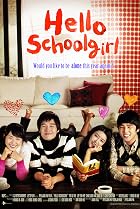
Hello, Schoolgirl

Image of Hello, Schoolgirl

Kwon Yeon-woo (Yoo Ji-tae) is a 30-year-old civil servant who just moved into a new apartment building. Han Soo-young (Lee Yeon-hee) is an 18-year-old schoolgirl who lives with her single mom (Na Young-hee), just one storey below. It is inevitable that they’ll meet, sooner or later. Soo-young seems annoyed by him at first, but then realizes that Yeon-woo is just shy. Slowly but surely the two fall in love, but will their significant age difference be a problem? Of course it will, because Soo-young’s mother doesn’t approve of their relationship. Meanwhile, Yeon-woo’s friend and colleague Sook (Kang-in) has been experiencing some heartache of his own. He has fallen in love with Ha-kyeong (Chae Jung-an) a woman significantly older than him, who isn’t completely over her ex just yet. Will love conquer all? Is it better to have loved and lost? And is there really such a thing as a cat-dog? 
Hello, Schoolgirl (original title: Soon-jeong-man-hwa) director Ryoo Jang-ha‘s second film and it’s based on a popular South Korean webcomic called Love Story by Kang Full. It’s unfortunate that the director hasn’t done a new film in five years now, because he really showed some promise and talent with this film. While we’ve seen this type of story repeatedly, this film feels like a fresh take on the romantic comedy. It distinguishes itself for its genuine heart and gleeful naivetĂ©. However it’s the actors that really make this film come alive and the good news is that they’re all fantastic, especially the leads (Yoo Ji-tae and Lee Yeon-hee). Also, worth mentioning is Choi Soo-young, who will of course be known to KPOP fans as a member of Girls’ Generation. I must say that I particularly enjoyed her performance, it would be great to see her in more films.
While the film is incredibly charming and undeniably sweet and romantic, it’s not without its flaws. The two romances almost feel like separate movies, and while the characters are connected it almost sometimes you just want the film to move on to the main storyline. Like I said though, it’s hard to resist the film’s cuteness and that’s the beauty of South Korean romances. They’re almost like fantasies: Too perfect, too cute, too romantic to be true. However I must say, that when things get complicated in the relationships I was completely taken by the film and unsure if things were going to resolve, and I’ve seen my fair share of romantic comedies so of course I should know that everything will be fine, but will it? So the my hats off to everyone for creating such an engaging story with characters you can actually care about and relate to.

Senin, 18 Februari 2008

Love Phobia

Image result for Love Phobia film cover
        
        One sunny day, a young boy named Jo-kang meets a curious young girl dressed in a bright yellow raincoat. She tells everyone in school that she is an alien and whomever she touches will be harmed. Everyone in that school becomes afraid of her, except Jo-kang. Jo-kang befriends the girl, Ari, and falls instantly in love with her. The quirky Ari loves telling Jo-kang stories, and he believes everything she says and is willing to do anything for her. After he and Ari huddle together beneath her yellow raincoat one rainy day, Jo-kang becomes sick with measles. Soon afterwards, she disappears.
       Ten years later, Ari contacts Jo-kang, now in high school, and asks to meet again. Although they have not seen each other in a decade, they have a wonderful time together, and their love begins anew. Ari tells him that she lives at a temple on a mountain that's actually a volcano, and that hot springs surround it. Jo-kang believes her when she tells him that her English got better after she was given lessons by an English ghost who visits her when she's naked. She also tells him that she plans to marry a banker so that she'll be able to rob his bank and leave the planet. Jo-kang travels all night to bring Ari her favorite dish from his home, presenting it to her as a surprise the next morning. She kisses him and Jo-kang catches the flu. Then Ari disappears once more, leaving Jo-kang devastated.
       Jo-kang becomes an adult, and one day Ari appears again in front of him and tells him to come with her. At first he ties her leg to a chair with shoelaces so she can't get away. Later that evening at his home, Ari explains to Jo-kang's father, a sushi chef, that people from NASA kidnapped her since the magnetic force in her body attracts the UFO's. Jo-kang makes plans for the next day, but Ari tells him that she is leaving for the States. Upon leaving, Ari reminds Jo-kang not to cross the line she drew on the ground, something she constantly told him in their childhood.
       One of Jo-kang's friends gets into an accident and when Jo-kang visits his friend at the hospital, he sees Ari there as a patient. Filled with pain and confusion, Jo-kang visits Ari's uncle, a monk, and pours gasoline on himself, threatening to set himself on fire unless he learns the truth. He discovers that Ari is suffering from HIV/AIDS that was accidentally transmitted to her at a hospital where she was taken after an accident that caused the death of her father.
     Jo-kang goes to an exhibit where Ari's photographs are displayed, and afterwards he piggybacks her to a grassy lawn where she explains that crop circles are signs left by a UFO. Later that night, Ari falls sick and is admitted back to the hospital. Jo-kang stands outside the hospital, getting wet in the rain. But when Ari's uncle tells him to come inside, Jo-kang replies that he's obeying Ari's instruction not to cross her line on the ground.
      Jo draws designs on the grassy lawn, and takes Ari there against doctor's orders, telling her to fulfill her destiny to leave the planet. Ari passes the last moments of her life telling Jo-kang that she loves and pities him for believing everything she said. Jo-kang then sees a flying saucer appear in the night sky, signifying Ari's death.
     In the final scene, Jo-kang goes on with his life, narrating in voice-over that the scent of love that Ari left still lingers. He prefers to believe that she's living on another planet, waiting for the day that they will meet each other again.

Kamis, 30 November 2006

Once in a Summer


Image result for once in a summer korean movie

      At first glance, Once in a Summer looks like your typical nostalgic tearjerker aimed at mass audiences. Long before it was released, the distribution rights were sold for US$4 million to Japan, where films of the pure love genre have performed very well. The film was also co-written by Kim Eun-Hee and Kim Eun-Sook, who've collaborated on several successful Korean dramas. And the biggest factor of all: it stars Korean heartthrob Lee Byung-Hun as a romantic lead. The film looks like just another another formulaic attempt to cash in on collective nostalgia - a type of film that Korean Cinema already has far too many of. However, despite looking like an obvious product for the masses, Once in a Summer is actually not all that bad.

     Once in a Summer opens in modern day at a television station where a writer tries to save her job by claiming to have booked famed professor Park Suk-Young (played by Lee in gray hair makeup), who was once her professor. After seeking him out, he agrees to go on the show if she can find a woman named Seo Jung-In (played by Soo Ae). It turns out Suk-Young (played without gray hair by Lee) was a politically apathetic student in 1969 South Korea. To get out of working for his father's company, he followed his left-wing radical classmates to a rural town to work for the summer as a volunteer. There, he met Jung-In, the local librarian who was treated especially harshly by the mayor because of a past crime her family committed, making her the black sheep of the village. Suk-Young falls in love at first sight, but Jung-In requires a little romancing before she can return the affection. But even once they've finally fallen in love, her family's past and the politically-turbulent time come to tear the happy couple apart.

     Once in a Summer may just be another way for Korean filmmakers to cash in on nostalgia, but credit director Jo Geun-Sik and his screenwriters for using it as more than just a way to create tragedy. Little bits of period detail, such as the small town's attempt to install electricity, an outdoor public movie screening, and the villagers gathering to watch the Armstrong moon landing, effectively place the viewer into the mood of the times. While the past does end up being used to create tragedy, Jo manages to establish a nice balance for most of the way - at least enough that people won't criticize him for whitewashing history. Despite that, the use of the Park Chung-Hee regime to create a fictional "pure love" story seems contrived by any means, and Once in a Summer is sadly no exception.

     Luckily, Lee works extra hard to show why he's one of Korea's best actors. The role of Suk-Young is not a stretch for Lee, who gave a chilling performance in 2005's A Bittersweet Life. However, he manages to exude enough boyish charm to make him an easy character to root for, despite being a few years too old for the role. Soo Ae does fine with her character, who is so innocent that she can't even bring herself to read a sex scene from a novel for the village elders. Soo does transition between lovable and tragic modes fairly well, but Lee's is really the performance that keeps the movie going.

     The problem with Once in a Summer isn't its somewhat uncomfortable mix of innocent love and political turmoil, but really how formulaic the whole exercise is. Fix two attractive stars together, put in touching melodrama, a bit of violence, some tragedy, and a movie is concocted. There's lots of tears, people getting slapped around, and even an embrace in the rain. On the other hand, Jo does try to tone down the romance portion, which can be a good thing. But sometimes a formula is there for a reason, and the romance in Once in a Summer feels too platonic for it to make the type of impact that the film seems to think it did. The film is entertaining, the stars are attractive, and they have suitable chemistry to make the romance work, but when the audience doesn't feel the romance, they can't get involved when tragedy strikes. It's rare that I wish for a Korean melodrama to be less subtle, but this is one of those times.

Kamis, 16 Februari 2006

A Millionaire's First Love

Hasil gambar untuk A Millionaire's First Love

Kang Jae-kyung (Hyun Bin) is your typical rich kid. He is arrogant, drives sporty cars, attends the big clubs and rides through school corridors on his motorcycle. As his 18th birthday approaches, he is set to inherit his grandfather's fortune, but first Jae-kyung is required to transfer to a new school in Gangwon Province and graduate. Until then all access to his penthouse, cottage and credit cards are denied. Should he fail to graduate or drops out then he loses everything. If he wishes to give up, he will only receive 0.1% of his over-all inheritance. With this in mind, he heads out to the countryside, to a small town in which daily life is far removed from what he is used to.
Shortly after settling into his new home, he meets 19-year-old Choi Eun-hwan (Lee Yeon-hee), who happened to run into him back in Seoul. They don’t exactly hit it off; he’s far too stubborn and cool for school. Conversely, she sees hope for him and sets out to make him see it for himself. They eventually draw closer, thanks to a set of coincidences and school projects. Jae-kyung learns of Eun-hwan's terminal disease and does what he can to make her happy. He even tells his lawyer that he would give up his inheritance so he could buy an orphanage for her.
One day during the rehearsal of a play at school, Jae-kyung notices that the play is resembles the incident that had happened in his life. He recalls a childhood memory of being at the orphanage at Gangwon, where he had met Eun-hwan and had made a promise to return in ten days. He finds Eun-hwan and tells her that he did not remember her or his promise because his parents had died in a car accident on that same day and his memories were thus erased. He tells her he loves her and they kiss.
The day of the play comes and Jae-kyung asks his classmate to trade places as a favor; him as the Colonel rather than the maid. He goes to Eun-hwan's side and she asks him if he could put on the socks he bought her earlier. While they are dancing, she feels a sudden pain and goes backstage much to Jae-kyung's worry. However, she returns. Eun-hwan's mother has also come to see the show.
Later, they celebrate the success of the play. The couple sit on a swing, Eun-hwan tells Jae-kyung "I love you" and that she's sleepy. Before falling asleep, she tells Jae-kyung to wake her up after 3 minutes. Soon after, the first snow comes.
On their graduation day, Eun-hwan receives the Award of Friendship but does not attend the ceremony as she never woke up. A bouquet of white flowers sits in her seat instead, next to Jae-kyung's chair. He stays for a while and walks outside carrying the flowers. His grandfather's lawyer comes, congratulates him and tells him that the inheritance is now his.
Later, Jae-kyung builds a house with numerous windows in memory of Eun-hwan. He states that after 50 first snows hit its windows, they will meet again